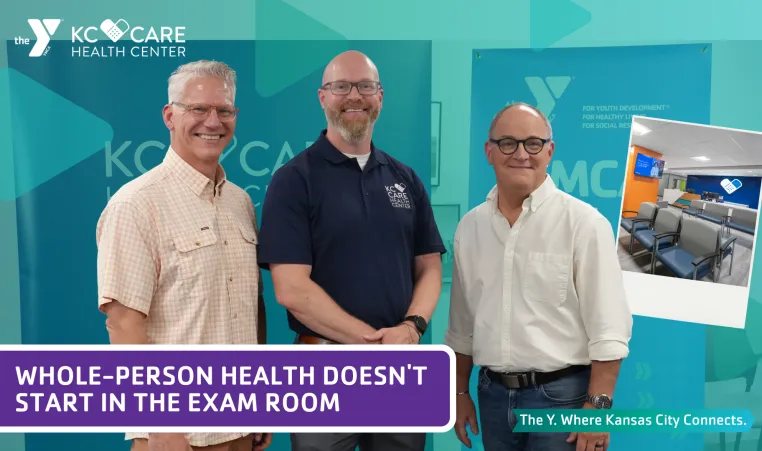
A conversation from The Movement with KC CARE Health Center
It started with a cup of coffee, definitely not decaf.
That's how Doug Day, Chief Marketing and Development Officer at KC CARE Health Center, describes the spark behind one of the most natural partnerships in Kansas City health. He was catching up with Paige Salveter, the Y's Senior VP of Brand Strategy and a longtime college friend, when the idea clicked: he's in health, the Y's in health, why not do something together?
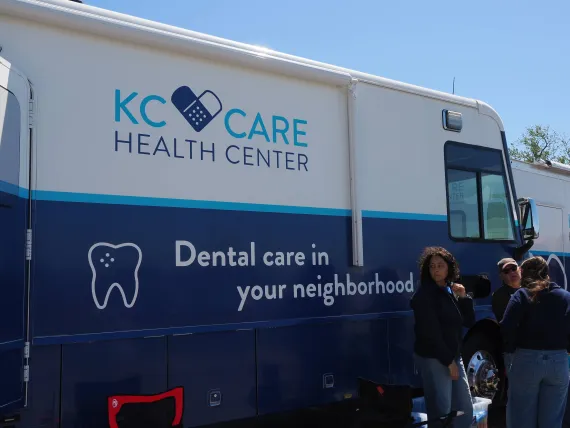
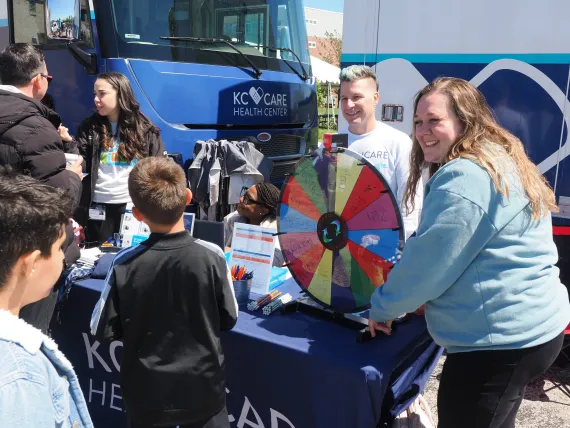
A few months later, KC CARE rolled two mobile medical units onto the lawn at the North Kansas City YMCA for Healthy Kids Day. Roughly 2,000 families were already there to play, connect, and have some fun. KC CARE met them where they stood, with dental screenings, wellness check-ins, and real conversations about health.
On the latest episode of The Movement, YMCA President & CEO Mark Hulet sat down with KC CARE President & CEO Wil Franklin and Doug Day to talk about what that day revealed, and why the Y and a community health center turn out to be working toward the very same thing.
Two organizations, one mission
KC CARE has served Kansas City since 1971. Today it cares for more than 23,000 patients across three clinical locations, and as a community health center, it operates on a principle that should sound familiar to anyone who knows the Y.
"We provide care regardless of your ability to pay," Franklin explained. Fees slide based on household income and size. The board is made up of patients. Medical, dental, behavioral health, and pharmacy services all sit under one roof, so families don't have to chase care across town.
Hulet kept hearing the echoes. Sliding scale. Financial assistance. Serving every stage of life. Showing up as a connector in the community. "There are so many parallels," he said. The Y runs 10,000 programs, but it really does one thing: connect community. KC CARE uses healthcare as its tool, but the goal runs deeper, moving people toward stability and a healthier life.
Health is bigger than a doctor's appointment
A through-line of the conversation: the things that shape our health often have nothing to do with a clinic.
Franklin pointed to the social factors that drive outcomes, such as stable housing, healthy food, safe neighborhoods to walk and play in, a healthy start in pregnancy and early childhood. Stress and friction matter too. Sometimes, he noted, the act of filling out a financial-assistance form is enough friction to make a parent give up on care entirely.
That's where KC CARE's patient health coordinators come in, a team that works alongside medical providers to anticipate the non-medical needs: applying for benefits, finding food or housing, navigating the system itself. As Day put it, they're the glue that keeps patients on a healthy path.
It's also where the Y fits. Active living, social connection, and a place where everyone belongs aren't separate from healthcare. They're prevention.
Where the partnership goes next
Asked where the two organizations could make the biggest difference together, both leaders landed in the same place: the very beginning of life.
Maternal and infant health topped the list. So did the early years, making sure kids start school with their vaccinations, without dental pain, with access to behavioral health support. "Working upstream instead of downstream," as Hulet framed it.
Day saw a concrete opening too: the childhood immunizations, sports physicals, and screenings families already need for Y camps and programs. Imagine a referral path where a parent enrolling their kid at the Y also opens the door to a primary care home at KC CARE, and everything else KC CARE offers along with it.
Breaking down the barriers
The leaders were candid about what stands between families and care, and how KC CARE chips away at it:
- Transportation. Every KC CARE location sits on a bus line, but buses take time, and fares just went up. KC CARE runs rideshare programs to get patients to appointments.
- Scheduling. Evening appointments and all-day, every-day walk-ins, because nobody plans to get sick at a convenient hour.
- Language and trust. KC CARE's chief medical officer holds the certification needed to help refugees and immigrants through their medical clearance, then becomes their doctor, not just a one-time stop. "We can only move at the speed of trust," Franklin said.
And one misconception worth clearing up: KC CARE is for everyone. "You're not taking up a slot," Franklin said. "You're helping increase access." The staff favorite T-shirt says it plainly: Everyone belongs.
One small step this month
Mark closed by asking his guests what a family could do right now. Their answer was refreshingly simple:
Call your doctor. Find out what screenings you're due for. And with school closer than it feels in June, get those back-to-school physicals and dental checkups done before the last-minute rush.
Whole-person health, active living, and unconditional care aren't separate ideas. They're connected parts of a healthier Kansas City, and they show up best in the trusted places where people already gather.
If this conversation moved you, share it with someone who cares about Kansas City. Then take that one small step this week, for your own health or someone else's.
Watch or Listen
Watch or listen to this episode of The Movement and learn how empathy, storytelling and inclusion can help build a stronger, more compassionate Kansas City.
The Movement is the YMCA of Greater Kansas City's wellness podcast. The Y. Where Kansas City connects.


